
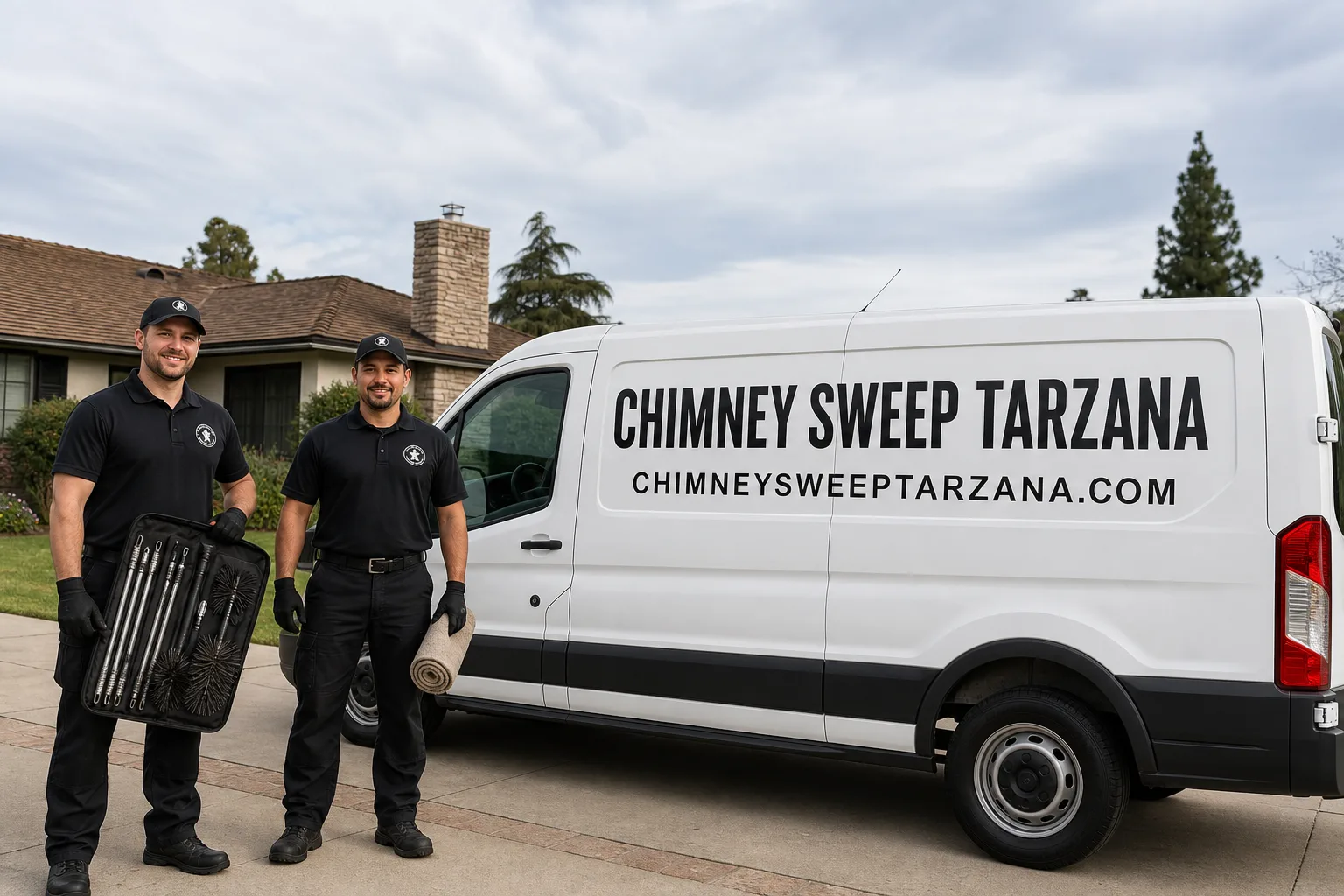
Fast, Reliable Dryer Vent Cleaning Across Rancho Park
Dryer vent cleaning in Rancho Park typically runs $130 – $235 for a standard single-story home, with longer or bend-heavy duct runs priced higher after we see the layout. Most jobs take about an hour to ninety minutes once we’re on site. We answer 24/7. Fast dispatch from 7am to 7pm, Sunday through Friday.
If your laundry room smells musty after a foggy morning, or a normal load suddenly needs two cycles, the vent is usually the culprit. Rancho Park’s marine layer does something specific to dryer ducts that inland homes never deal with, and we’ll explain exactly what that is below.
Why Rancho Park Homeowners Call Chimney Sweep Tarzana for Dryer Vent Cleaning
We work in Rancho Park regularly, and the homes here have a rhythm to them. Most were built between the 1920s and 1950s on compact lots, so the dryer is often tucked into a hallway closet or a converted service porch with a duct run that snakes through the wall to an exterior hood on stucco. Short straight runs are rare here. That’s the first thing we check.
The second thing is the hood itself. Salt air off the Pacific corrodes aluminum flaps and springs faster than people expect. A hood that won’t open traps heat and moisture. One that won’t close invites birds and debris. We stock replacement hoods and flap assemblies on the truck, so a corroded hood gets swapped the same visit rather than flagged for a second trip.
Ray Montoya leads our team, and he’s spent twelve years building a service that treats dryer vents as a fire hazard you manage, not an afterthought you ignore. Our dryer vent cleaning crew carries camera inspection equipment so you can see the inside of your duct before and after. No one recommends work you can’t verify.
Our Dryer Vent Cleaning Services in Rancho Park
Full Vent System Cleaning
A complete cleaning clears the entire duct run from the dryer connection to the exterior hood. In Rancho Park, the marine layer turns lint into something closer to felt than fluff, so we use rotating brushes and high-volume air to break that damp mat off the duct walls rather than just loosening what’s loose. You’d be surprised how much palm frond dust and fine silt gets carried in on coastal air and trapped in that sticky lint.
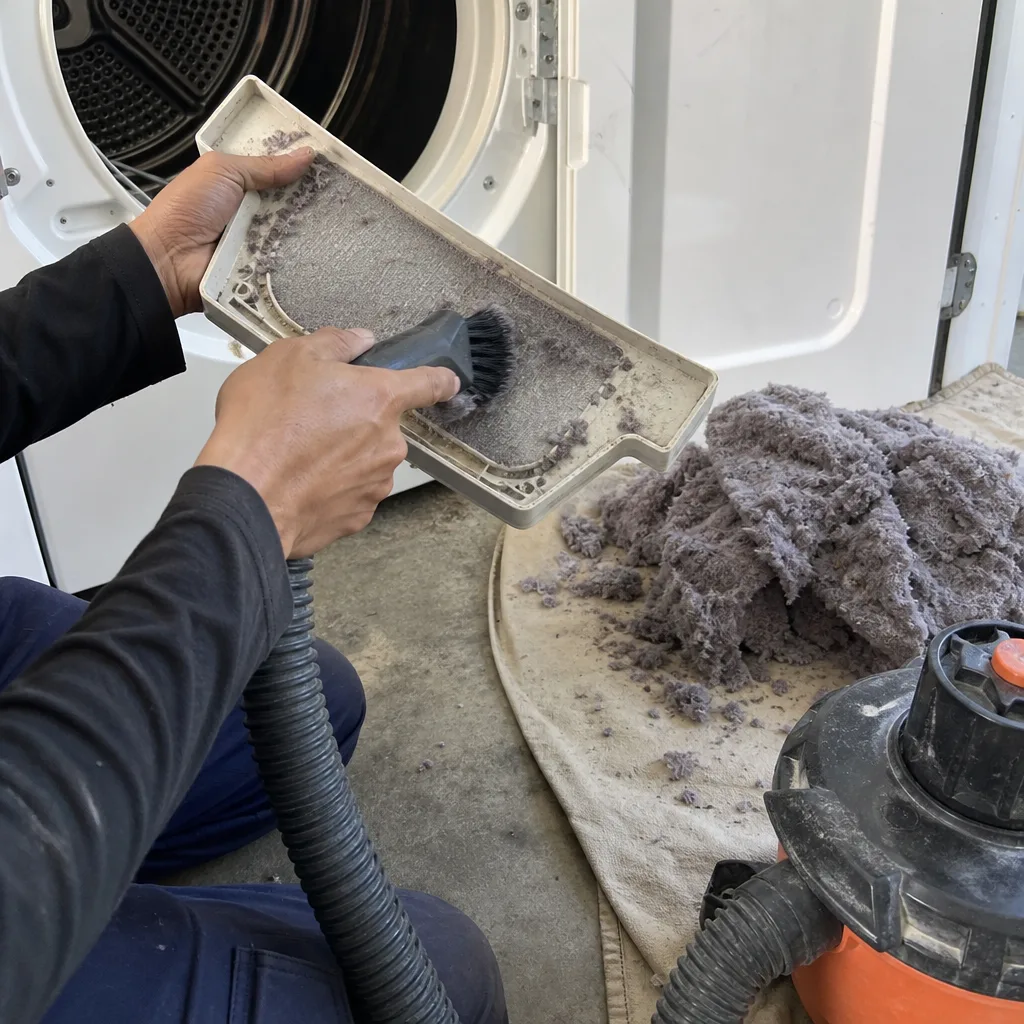
Lint Removal
Lint removal covers the dense buildup that narrows the duct opening and backs heat up into the dryer. On a 1940s Spanish Colonial in Rancho Park, the run might have three or four elbows behind stucco, and lint packs hardest at each bend. We pull the machine out far enough to clean the transition hose and the wall connection, because that’s where the fire starts. Typical lint removal alone runs $90 – $140 when the duct is otherwise in good shape.
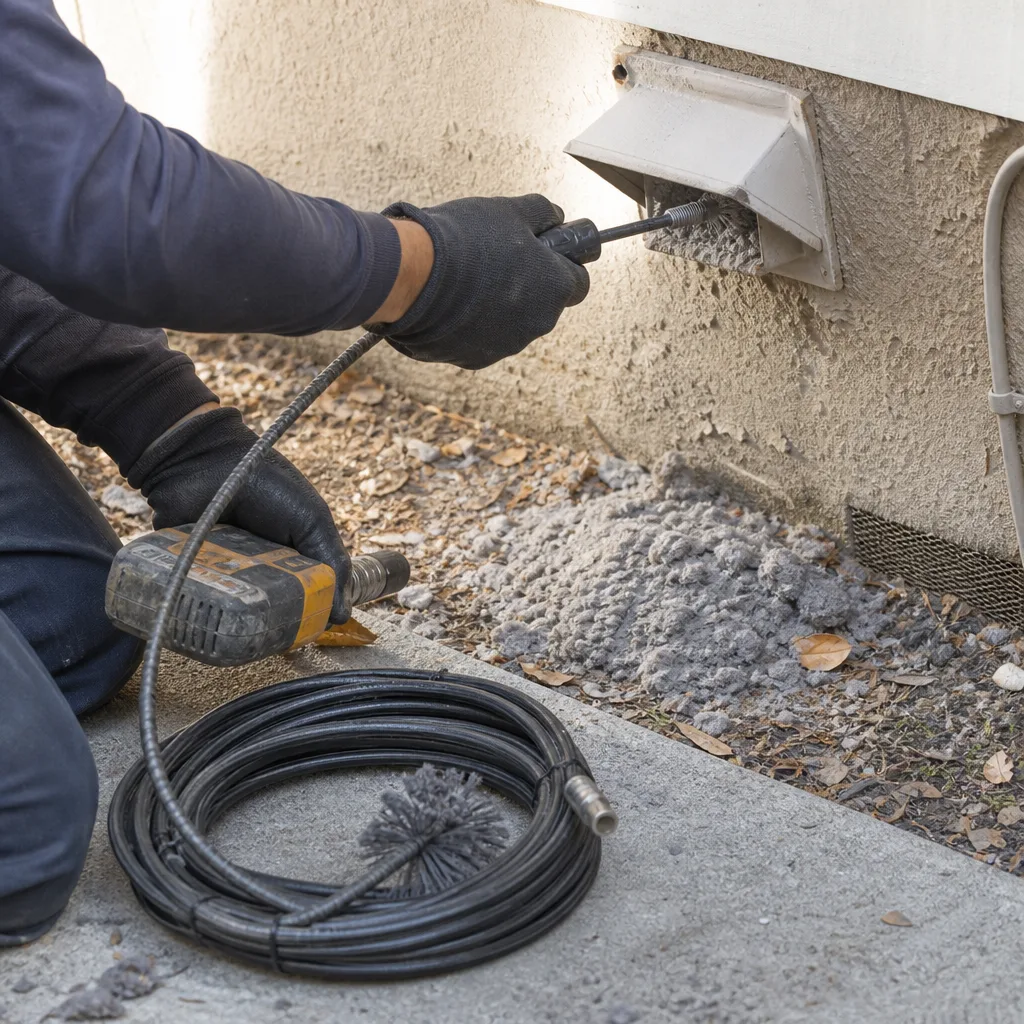
Lint Screen & Trap Cleaning
The screen catches the big stuff, but a lot of what makes it past is fine enough to coat the inside of the trap housing and the first few feet of duct. After foggy mornings, that residue draws moisture and hardens. We clean the trap cavity, the screen channel, and the blower area behind the lint filter. It’s quick, but it’s the difference between airflow that works and airflow that just barely does.
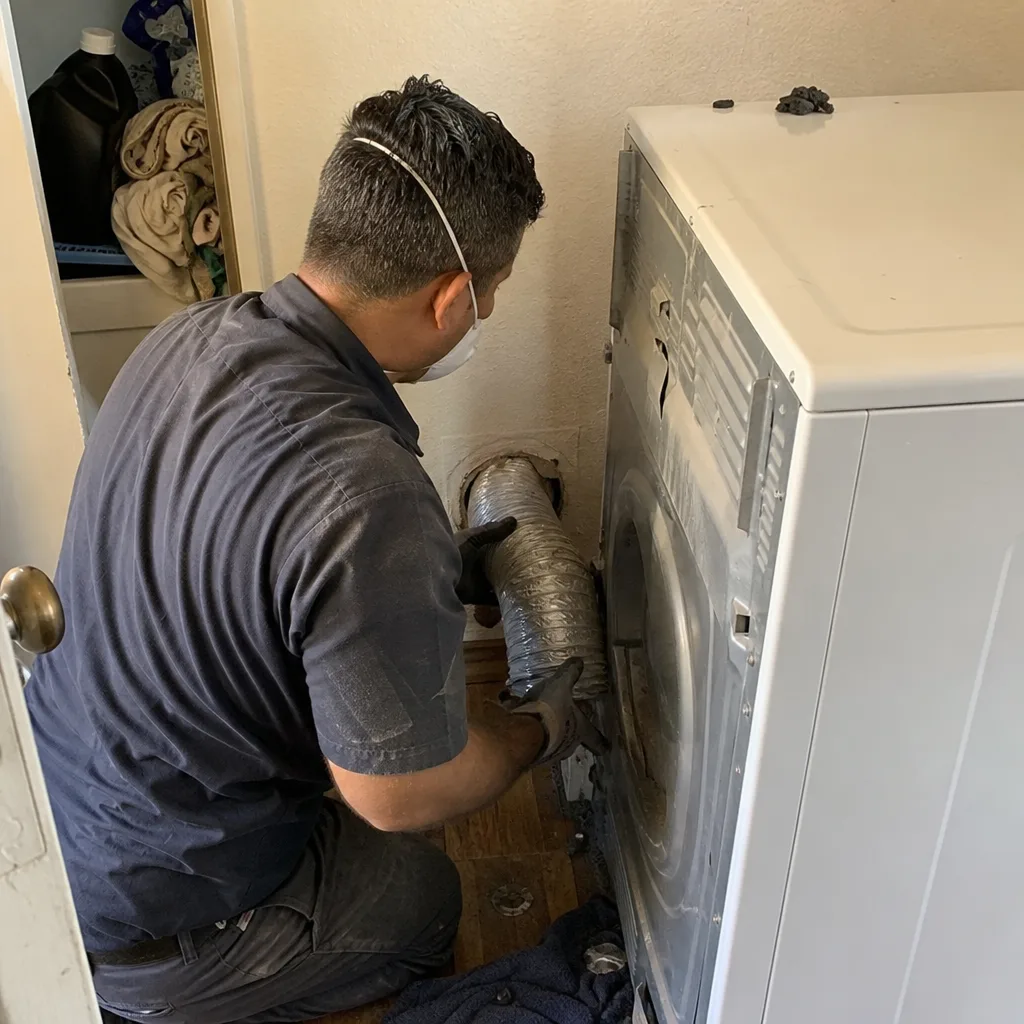
Rooftop Vent Cleaning
Homes that vent through the roof rather than a side wall are common enough in older Rancho Park construction that we plan for it. Rooftop terminations get bird activity, debris, and the same damp coastal air, but the clog is harder to spot because you can’t see the hood from the ground. We clear the opening, check the cap, and re-secure the flashing if it’s loose. A rooftop vent cleaning runs $150 – $240 depending on roof pitch and access.
Common Dryer Vent Cleaning Problems We See in Rancho Park Homes
- Damp lint that packs like felt. The marine layer puts moisture into the vent every morning. Lint that would blow loose inland clings to duct walls and hardens over time. A vent can go from marginal to fully obstructed inside a single season.
- Corroded exterior hood flaps. Salt air eats aluminum hoods. The flap freezes half-open, birds get in, and then the bird debris catches more lint. Or the flap seizes shut and the dryer can’t push air at all. We replace these routinely.
- Long, bend-heavy runs on original layouts. A 1920s or 1930s compact-lot home in Rancho Park was never designed for a modern dryer. Three elbows and a twenty-foot run behind stucco means lint has four places to settle instead of one. Every bend needs active cleaning, not just the ends.
- Musty odor after fog. When the hood isn’t sealing and the duct holds damp lint, the smell comes back into the laundry room. It’s not the washing machine. It’s the vent pulling coastal air into the house overnight.
Pricing for Dryer Vent Cleaning in Rancho Park, CA
A standard dryer vent cleaning for a single-story Rancho Park home runs $130 – $235. That covers the full duct run, the exterior hood, the lint trap cavity, and a camera check before and after so you can see what came out. Rooftop terminations add $30 – $80 for access. Corroded hood replacement, when needed, adds $40 – $90 for the part, and we’ll show you the old one before we install the new one.
What moves the price is access and duct length. A garage laundry with a short straight run is on the low end. A second-story laundry room with a long run through stucco is on the high end. The written estimate sets the final price. Call (877) 269-3953 for a free estimate. We answer 24/7. Fast dispatch from 7am to 7pm, Sunday through Friday.
We Also Serve Cities Near Rancho Park
Our crews drive into Rancho Park from Tarzana daily, and we also cover Cheviot Hills, Palms, Mar Vista, and Brentwood. If you’re just over the line on a street that blurs into one of those neighborhoods, call and we’ll confirm we can reach you. Same team, same pricing, free estimate.
The Coastal Dust Problem Other Vent Cleaners Won’t Tell You About
Rancho Park sits close enough to the ocean that the morning marine layer does real work on the inside of a dryer duct. It’s not just lint that accumulates here. Fine coastal dust, the kind you see on patio furniture after a dry Santa Ana, gets pulled into the vent and embedded in the lint. Add morning damp, and that mixture adheres to duct walls in a dense mat that brushes from a big-box kit won’t budge. A vent that would take two years to clog in Woodland Hills can pack solid in one year here.
We were called to a 1940s Spanish Colonial on Patricia Avenue where the homeowner complained that a normal load was taking two cycles and the laundry room smelled faintly musty after foggy mornings. When we pulled the exterior hood off the stucco wall, the aluminum flap was frozen half-open with white corrosion and the 4-inch duct behind it was lined with a dense, damp mat of lint that had trapped palm frond dust. We cleared the full run, freed the flap, and the next load dried in one cycle.
What a Failing Exterior Hood Looks Like
The hood is the only moving part outside the dryer, and salt air is hard on it. Here’s what we check when we show up to a Rancho Park home:
- The flap should swing freely and snap shut when no air is pushing. If it hangs open or won’t move, it’s failing.
- White or chalky powder around the hinge points and screw heads is corrosion. The springs lose tension, and the flap sticks.
- Rust streaking down the stucco below the hood means the cap or its gasket has been leaking. The duct behind it is almost certainly holding damp lint.
- A hood that’s been pecked or pried open has birds involved. Bird nesting in a dryer duct is a fire hazard and a blockage, and it happens more in spring but isn’t limited to one season here.
We stock replacement hoods in standard 4-inch sizes and can swap a corroded unit the same visit. That’s a flat part cost, agreed before we do the work.
Why Cleaning the Full Run Matters More Here Than Inland
In a dry inland city, lint mostly stays dry and crumbly. Brushing knocks it free and airflow carries it out. In Rancho Park, the damp turns the first layer into a dense felt that lines the duct like a sock. Air moves through the middle but the heat doesn’t dissipate properly. The dryer works harder, the moisture lingers, and the lint absorbs it like a sponge. That cycle accelerates clogging and creates exactly the conditions where lint can ignite.
Original 1920s through 1950s layouts compound the problem. A bathroom or hallway laundry closet means the duct runs horizontal through stud cavities, then turns up or around a corner to reach the exterior. Every turn is a lint trap. A quick clean from the outside only reaches the last few feet. That’s why we clean from both ends and check the middle with a camera. If we can’t see it, we can’t clear it properly.
Key Takeaways for Rancho Park Homeowners
- Coastal damp makes your dryer vent clog faster than an inland home’s vent. Expect to clean every year, not every three.
- Salt air corrodes exterior hood flaps. Sticking flaps are a sign the duct behind them is holding damp lint.
- Older Rancho Park homes often have long, bend-heavy duct runs. Those bends hide lint packs that a surface clean won’t reach.
- A musty laundry room smell after foggy mornings usually isn’t the washer. It’s the vent.
- Nothing gets recommended without camera proof you can see yourself. That’s how Ray Montoya has run this team since 2014.
Safety, Plain and Simple
Dryer lint is flammable, and a clogged vent is the leading cause of dryer fires in the US. The mechanism isn’t complicated: airflow drops, heat builds, and the lint inside the duct is dry enough at its core to ignite even when the outer layers are damp from coastal air. You can’t see the buildup from the outside, and a lint screen that looks clean has nothing to do with what’s deeper in the duct. If your dryer is taking longer than it used to, the vent needs attention. If the hood flap isn’t moving, don’t force it. Call us.
Serving Rancho Park, CA – Our Local Coverage Area
We serve Rancho Park and nearby communities. Use the map below to see the area we cover. If you’re nearby, we can almost certainly help.
FAQs – Dryer Vent Cleaning in Rancho Park
The marine layer pushes damp air into your vent every morning, and that moisture turns loose lint into a dense mat that sticks to duct walls. Salt air makes it worse by corroding the exterior hood so the flap doesn’t seal. Most Rancho Park homes need annual cleaning, where inland homes often go two or three years. Call (877) 269-3953 to schedule a check. We answer 24/7. Fast dispatch from 7am to 7pm, Sunday through Friday.
Look for a flap that hangs open or won’t move when you push it gently with a broom handle. White chalky corrosion around the hinge, rust streaks on the stucco below the hood, or any sign of bird activity at the opening means the hood needs replacement. A failed hood either blocks airflow or invites debris in, and both load the duct with more lint. We can replace it the same visit we clean.
Yes, and it usually is. When the exterior hood doesn’t seal, coastal air drifts into the duct overnight and cools against the damp lint inside. That produces the musty smell you notice after fog. The fix is a full vent cleaning and usually a new hood flap. Call (877) 269-3953 for a free estimate.
They need a full-run clean from both ends with a camera check in between. Short straight runs can be cleared quickly from the outside. Long runs on 1920s through 1950s layouts build lint at every elbow, and a partial clean just pushes the problem deeper. We price by the run length and access, not a flat fee that hides the real work.
We pull the dryer out, clean the transition hose and trap cavity, brush the full duct run, clear the exterior hood, and check the opening with a camera. The estimate covers all of it. Typical cost for a single-story Rancho Park home is $130 – $235, with rooftop access adding $30 – $80. Call (877) 269-3953 and we’ll quote your exact setup.
Dryer vent cleaning is one of the two household fire-hazard flues we handle, and we bring the same camera-verified standard to every duct in Rancho Park. For full vent system work, lint removal, or a hood replacement, call (877) 269-3953. We answer 24/7. Fast dispatch from 7am to 7pm, Sunday through Friday. Written by Ray Montoya, Owner at Chimney Sweep Tarzana, serving Rancho Park since 2014.